Plot Summary
Labyrinth is a 1986 fantasy film directed by Jim Henson and starring Jennifer Connelly and David Bowie. The film follows Sarah (Connelly), a teenager who is preoccupied with fantasies and fairytales. After arriving home late to watch her infant step-brother, she wishes for the Goblin King (Bowie) to take her brother away. When he does just that, she must journey through the titular Labyrinth to rescue the baby before he is turned into a goblin.
Note: The following will contain spoilers for the finale. I will also be writing from the perspective that you have seen the film. So my ramblings may be confusing if you haven’t seen it. If you haven’t, then I highly recommend you do! Not just for the great story and themes, but the 80s really did fantasy better than any decade since. And Jim Henson’s technical mastery of puppets is truly a spectacle.
Behind the Scenes
After the commercial failure of his film The Dark Crystal (another banger I’d recommend), Henson and Brian Froud (a fantasy illustrator and collaborator on Dark Crystal) wanted to make another fantasy film but with a lighter tone. Henson hired Terry Jones, from Monty Python fame, to write the script. Brian Henson (Jim Henson’s son) later stated in an interview that the first version of the script, although very funny, was not very strong story-wise. Laura Phillips, Elaine May, and George Lucas all helped with strengthening the story and characters.
Many actresses auditioned for the role of Sarah, including Sarah Jessica Parker, Helena Bonham Carter, and Laura Dern. But Jennifer Connelly won Henson over, and remained friends with him after production. Jim Henson wanted a real life rock star to play Jareth the Goblin King, not only for their sex appeal, but also to help write the songs. Micheal Jackson and Sting were considered, but Brian Henson pushed for David Bowie. And I, for one, am grateful.
The visuals of the film, especially the goblins, were inspired by Froud’s illustrations (I highly recommend his book, ‘The Goblins of Labyrinth.’ It’s beautiful and whimsical as hell). Other aspects, such as the tunnel of hands and the Fireys, were ideas of Terry Jones, which were then expanded on by Henson and his team. Henson was also inspired by the works of author and illustrator Maurice Sendak, who was friends with Henson.
The songs in the film were written by David Bowie and the score was written by Trevor Jones. The only song not sung by Bowie in the film was ‘Chilly Down’.
Themes
The overall theme of the film is about growing up, like many fantasy stories. And these two aspects of growing up are explored in the film.
- Responsibility: Sarah is a teenage girl (played by the, then, 15 year old Connelly) who escapes into fantasy to the point of neglecting her responsibilities. When her flights of fancy result in the kidnapping of her baby brother, she must journey through the labyrinth to learn what it means to be responsible. Each interaction she has in the labyrinth teaches something. Not judging things as they seem. Not being cocky. Not expecting the world to revolve around her. Every choice she makes has consequences, and usually not in her favor until she starts thinking critically.
- Sexuality: Sex is a huge theme throughout this film. David Bowie is sexy as hell, and the ball room scene feels especially like some kind of weird orgy. Part of growing up is sex. And all the dangers that come with it. Sarah is attracted to Jareth, and honestly, probably flattered that he is also sexually attracted to her. But in the end, Jareth is much older than her (and also the freaking king of this place), and that kind of dynamic is fraught by power imbalance. She can never be his equal. And in the end, she rejects him and her confidence in herself grows stronger because of it.

On the Infamous Codpiece
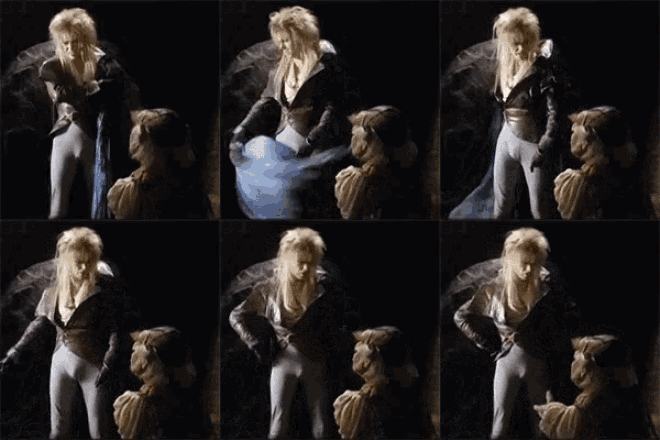
I always get kind of annoyed when people deride Labyrinth for being weird or bad because of “dAVid BowIE’s PacKaGE! wHOaOaoo!” People treat it as some quirky, inexplicable anomaly that has no context. I want to ask them if they watched the movie, and if they thought at all about the themes the movie is exploring. It just seems like a bad faith critique, that is an incredibly shallow reading of the film.
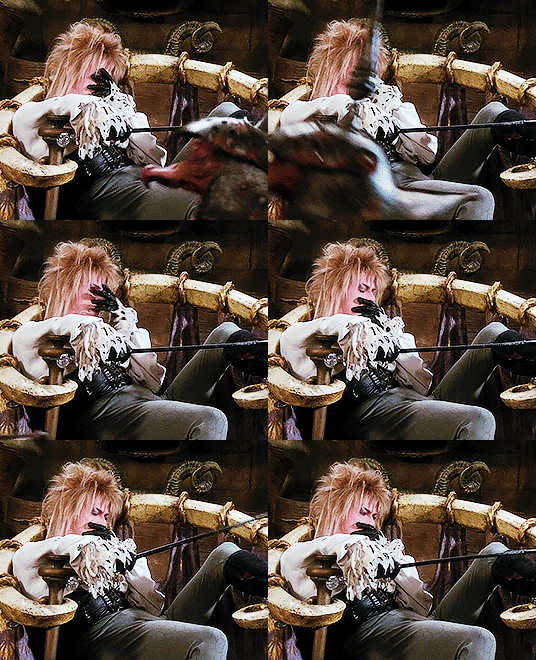
Now, let me be clear. I'm not saying the codpiece isn't funny. Because it most certainly is. Just don't point at Bowie's giant, stupid codpiece and say that's what makes this a bad movie or act like it doesn't have a thematic purpose.
Brian Henson has since talked about the codpiece and its symbolism in multiple interviews. Here is an excerpt from an interview he did with comicbook.com.
“But the truth is yes, it’s absolutely deliberate. That’s from Brian Froud’s artwork. The codpiece represents male sexual aggression. Sarah is at a point in her life where she’s a child but she’s becoming a woman, she’s in that cusp period, and the character of Jareth is sort of an aggressive, adult, masculine sexuality, that is both terrifying to her and very attractive to her. So yes, it’s definitely part of the storytelling that he should have this codpiece that’s a masculine, sexual image…”
In another interview after a screening of the film at the USC School of Cinematic Arts, he says,
“Because he (Jim Henson) was like, this is great! This is what the movie’s about. She’s like 15, she wants to be treated like an adult, but whoa!! That thing’s scary!”
The audacity of Jareth’s junk is the point. What aggressively screams masculinity more than an exaggerated codpiece? Jareth is not only an object of sexual desire, which is appealing to Sarah, but he’s also scary. Men are scary. Especially men like Jareth. His dialogue at the end of the film, “Just fear me. Love me. Do as I say, and I will be your slave,” is terrifying. It’s the lie that, if women just do whatever men say, they’ll always do what is right for women. Which is obviously bullshit. This is why Sarah’s rejection of that kind of dangerous, sexually aggresive masculinity is so powerful. “You have no power over me.”
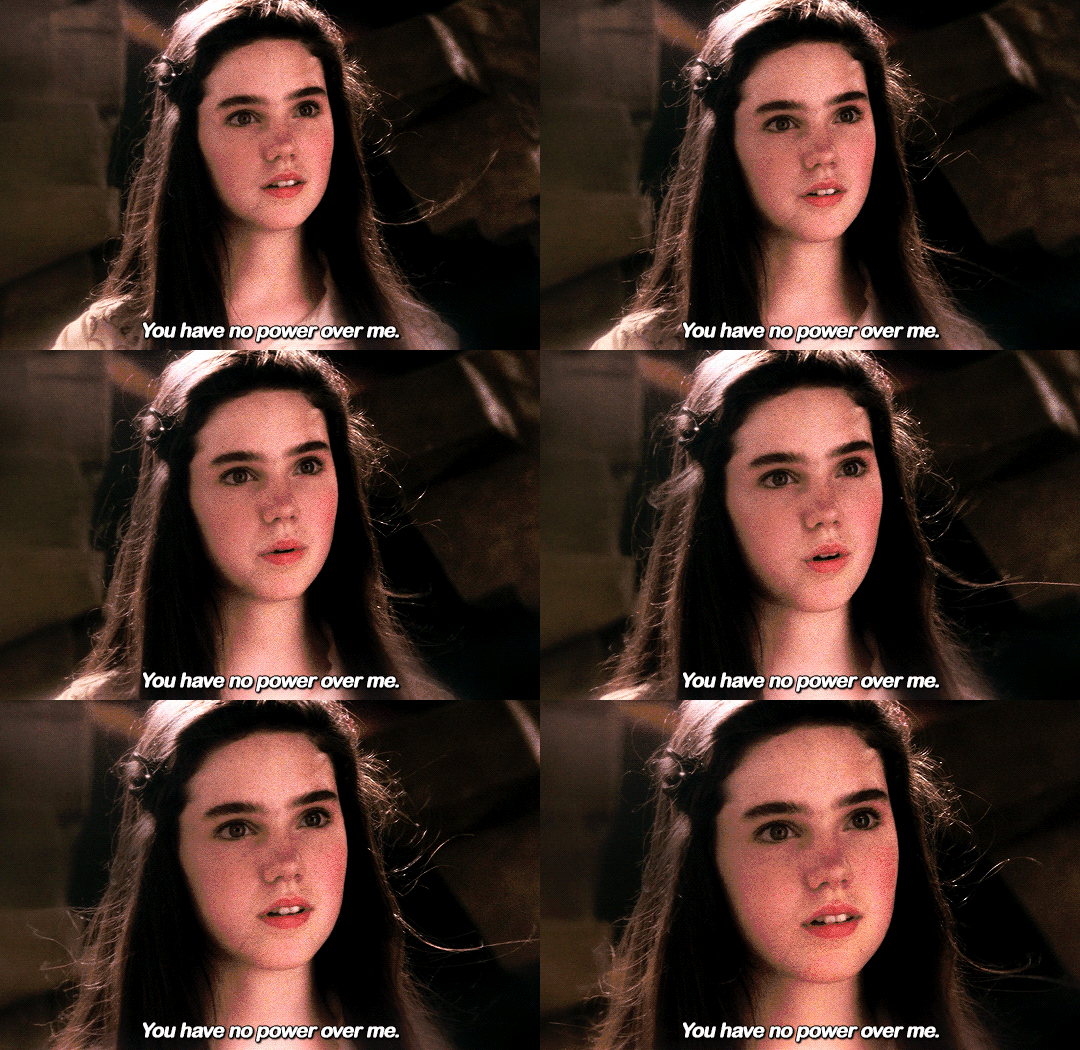
People only have the power that you give to them.
What the Film Means to Me
I don’t think there has been a moment when this film wasn’t part of my life, since it came out a couple years before my birth. And I've always been obsessed with it. When I was two years old, I would run up and down my parent’s long hallway, banging my hands against the walls just like Sarah after entering the labyrinth. I flicked the light switches on and off, just like she does after baby Toby is kidnapped. I watched it over and over (and still do). My childhood best friend told me decades later that she hated this film because I constantly made her watch it all the time. (Girl, why didn’t you speak up before??) I have books about it. I own it on dvd, blu-ray, and 4K. I own the cd and the vinyl record. And I’ve purchased many pieces of fan art. It is my favorite movie.
As a child, I probably loved it because Sarah is a brunette with brown eyes and, I too, am a brunette with brown eyes.

I love the music. It’s the only time I will permit such jazzy saxophone to accost my ears. I especially love the songs “As the World Falls Down” and “Within You.” The two most melancholy songs in the film, you say? Yeah. That’s on brand for me. When I was a child I recorded the songs from the tv onto a cassette tape. When I had my own money, it was the first cd I bought. And when I got into vinyl as an adult, it was the first new vinyl I bought.
I love the costumes. Sarah’s ballgown is my dream cosplay. I have the skills and the patterns, now all I need is the money for all that fabric. (ಥ﹏ಥ)

I love the puppetry. I mean, Jim Henson is the master. You can’t go wrong.
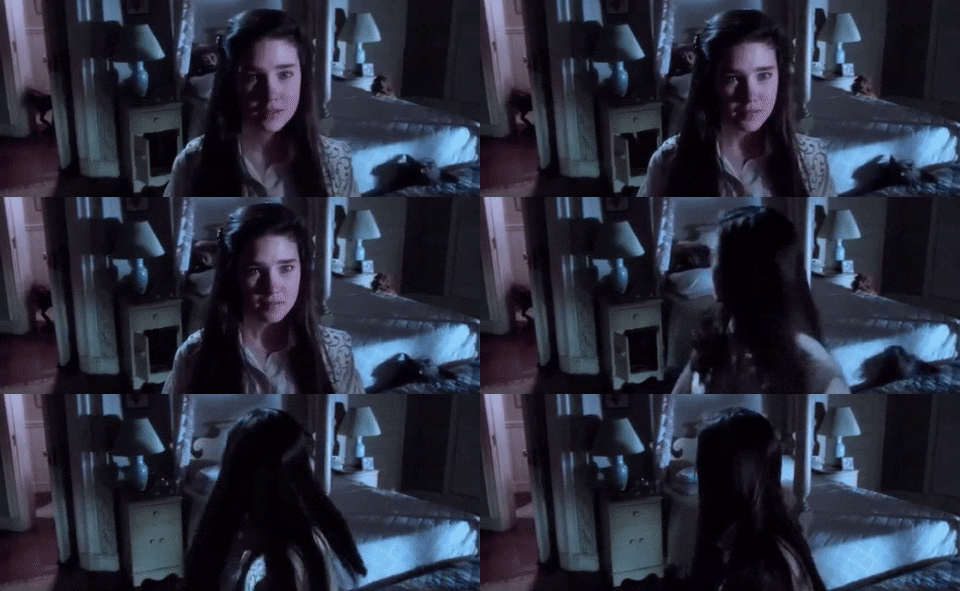
I love the entire aesthetics. You simply cannot beat the 80s for fantasy. Anything after this era can never compare.
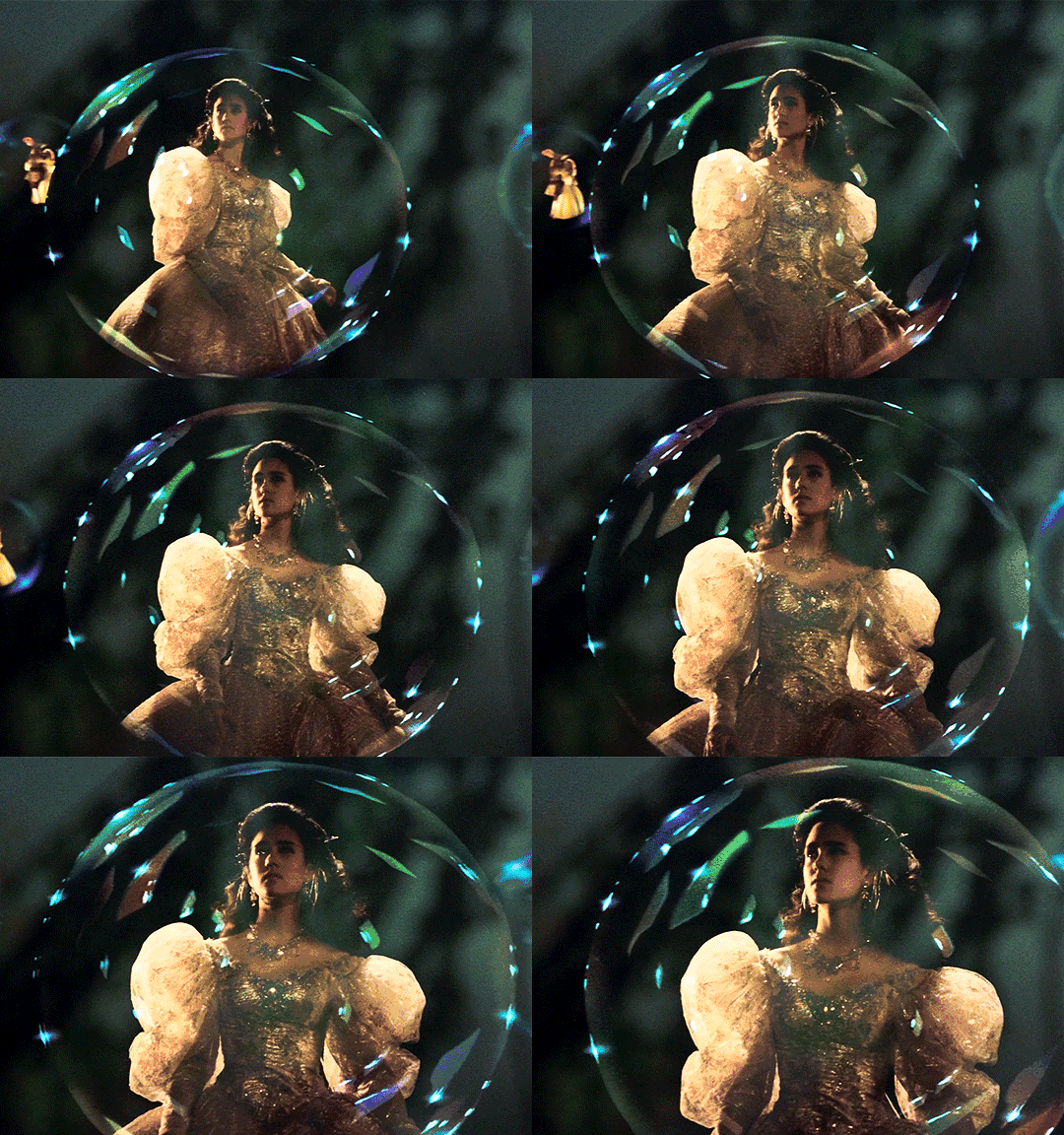
But as I grow older, I love it more and more for it’s themes. It’s a film about a young woman coming of age. How scary yet alluring adulthood is. About the push and pull between wanting to be a grown up and do grown up things, but also wanting to stay a child forever. Sarah wants to play pretend and imagine herself in fantasy worlds. She resents her stepmother’s attempt to give her more responsibility. Yet, she wants to be taken seriously. She is attracted to Jareth’s overwhelming adult sexuality. She likes how he treats her like an adult. Suddenly, adulthood seems very appealing. But ultimately she rejects his version of what an adult woman is supposed to be. And that message is deeply feminist and empowering.
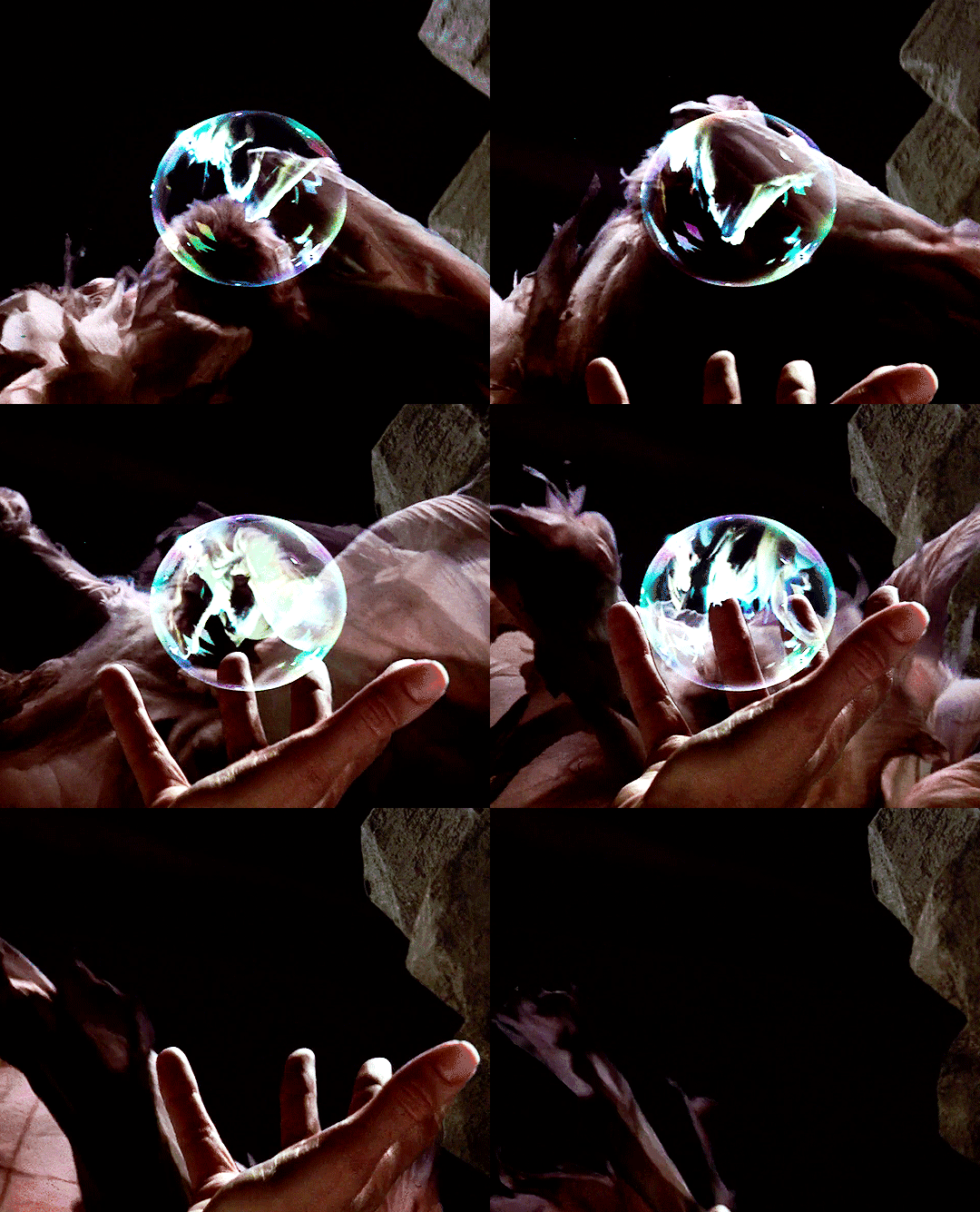
Sarah wants to stay a child, but she also wants to be a sexual being. I also relate to this dichotomy. Clearly, as you look around this very website, you can see that so many of my interests are “childish.” Cartoons. Dolls. Cosplay. Yet, I lost my virginity at 14 (one year younger than Connelly when she made this film) to a man older than me, who wanted to control me. And I also rejected him in the end.
I also like that at the end of the film, she doesn’t have to give up “childish” things in order to grow up. She tells Hoggle, “I need you, Hoggle. I don't know why, but every now and again in my life - for no reason at all - I need you. All of you.” Growing up doesn’t mean rejecting play, and fantasy, and whimsy. It's just knowing when it's the right time for that stuff. As Jim Henson proves in his many works. I feel like I really did take Henson’s message to heart, without even realizing it until much later.
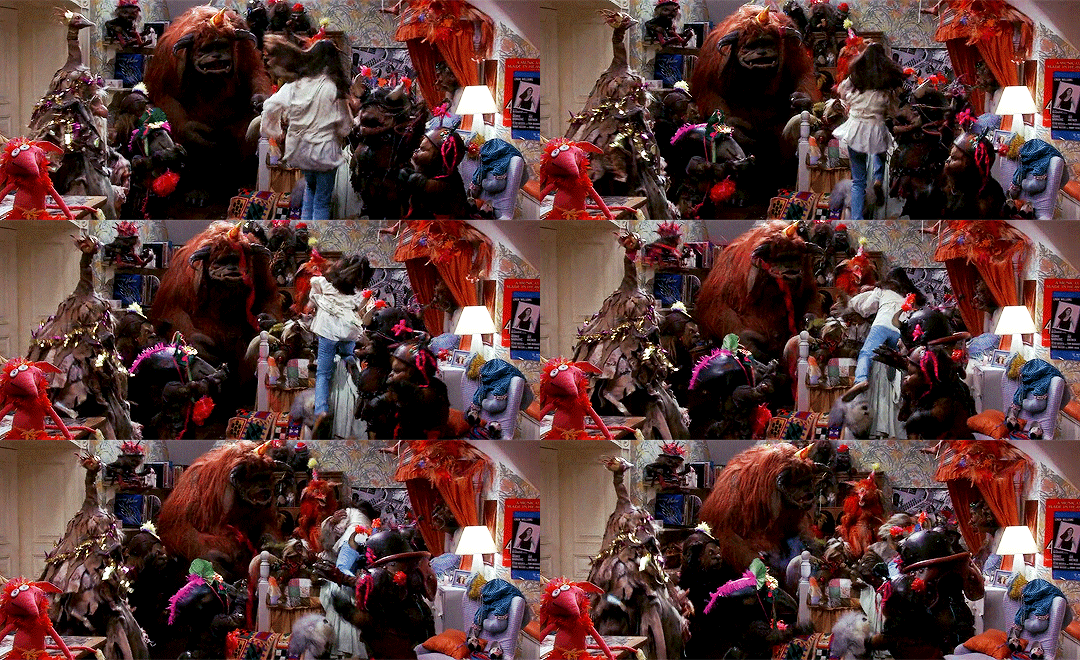
This film is never far from my thoughts, and I will wax rhapsodic about it given any opportunity. Although far from a perfect film, I think it’s themes and the incredible film making make it a classic that deserves to be loved and watched for generations to come.


If you want to watch an excellent video essay about Labyrinth, this video is by far my favorite. This guy is the first person to say everything I’ve ever felt about Labyrinth and he articulates more themes than I’ve talked about here that I hadn’t realized before.
Here is a blog with hi-res photos of Sarah's ballgown, if you're into that sort of thing. Part 1 Part 2
And if you want to watch a video essay about the muppets and how technically brilliant Jim Henson was, you can watch this one too!