.jpg)
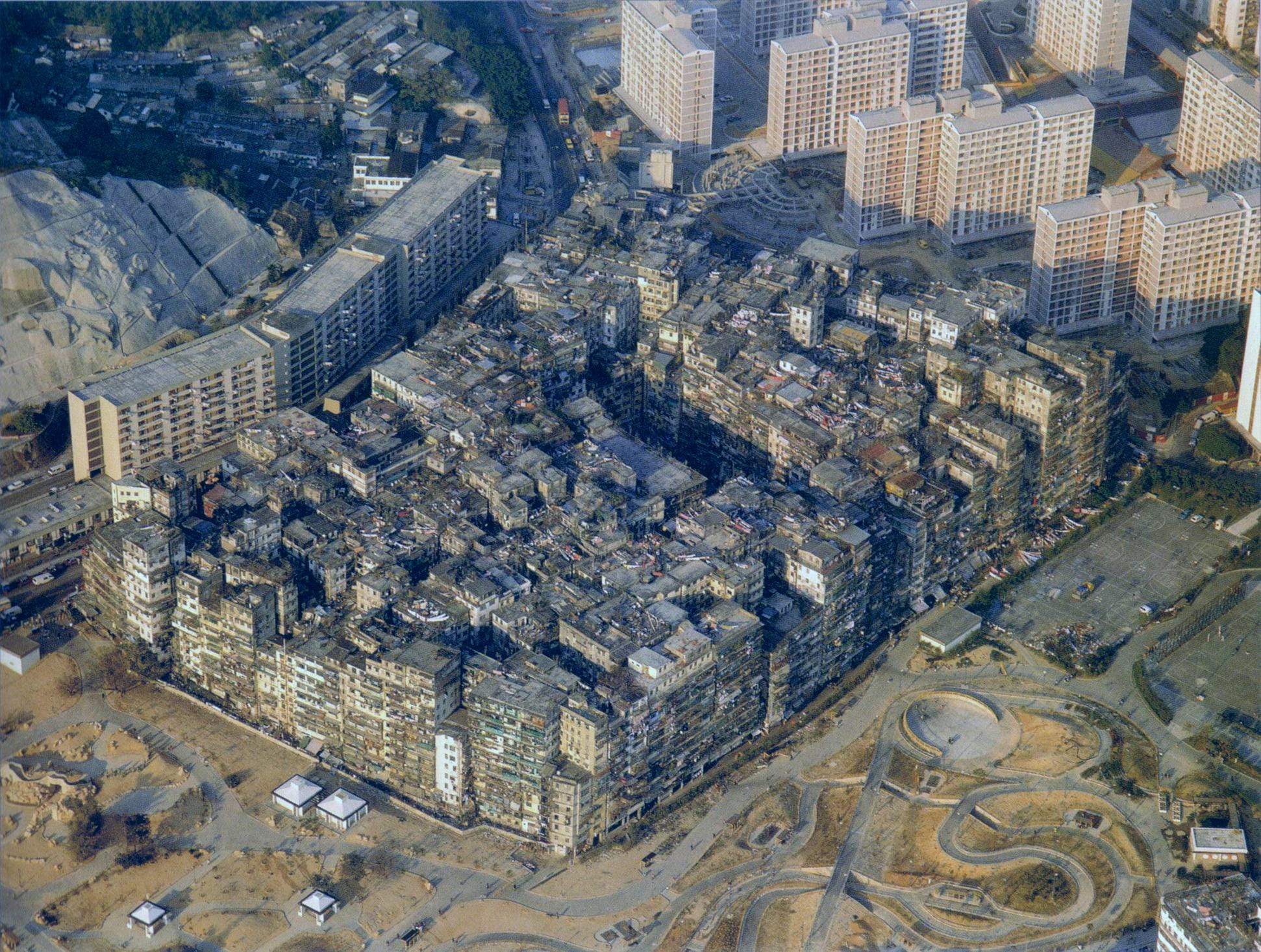
Kowloon Walled City was an incredibly densely populated enclave, roughly 6.5 acres in size, inside of British Hong Kong that existed from the end of WWII to 1994. Due to a unique political situation between the British and Chinese governments, the city was largely ungoverned.
Kowloon Walled City started out as a military outpost inside of Kowloon City during the Song dynasty. After a bunch of political stuff went on between China and Britain in the 1890s (that I won’t get into, cus it’s really convoluted), Britain was given control of Hong Kong for 99 years. Kowloon Walled City was not part of this deal, but Britain attacked the walled city anyway and took it over. At that time about 700 people lived in the walled city. Even though they technically controlled it, the British government didn’t really govern the walled city at all into the 1930s.
More political stuff happened, and then China and Japan went to war. Japan occupied the walled city during WWII and destroyed the already crumbling city wall to extend the nearby airport.
After the Japanese surrendered in 1945, China started working toward taking over Kowloon Walled City. But there was a Chinese civil war, and a bunch of refugees fleeing Hong Kong occupied the city. By 1947, 2,000 people lived there.
.jpg)
.jpg)
.jpg)
.jpg)
Then China basically wrote Britain a letter that was like, “Yeah, we’re going to control the walled city now.” Britain was like, “Um, no. Why not put a garden on top of it in remembrance of the ‘Anglo-Chinese trusteeship’ or something?” I know it’s surprising to learn this, but China was not into that idea. It’s like, they didn’t want to be colonized or something.
The British tried to run the 2,000 squatters out of the walled city in 1948, but gave up after a bunch of riots happened because the residents didn’t want to be controlled by Britain either. After that, Britain pretty much washed their hands of the place and stopped trying to govern it. Then a big fire happened in 1950 that destroyed most of the city.
Note: I’ve considerably glossed over a bunch of political back and forth between China and Britain. If you are into that kind of thing, you’ll have to find out more on your own.
And that is really when the legend of Kowloon Walled City started. China wouldn’t officially cede the city to the British, but couldn’t really follow through on their claim. And the residents of Kowloon Walled City did not want to be governed by the British. Other than police raids sometimes, crime was allowed to run rampant. The city became a hot bed of sex work, drug dealing and doing, gambling, and unregulated manufacturing. Before the Hong Kong government made a serious effort to reduce crime in the city in the mid 80s, it was mostly governed by groups of gangs called the Triads.
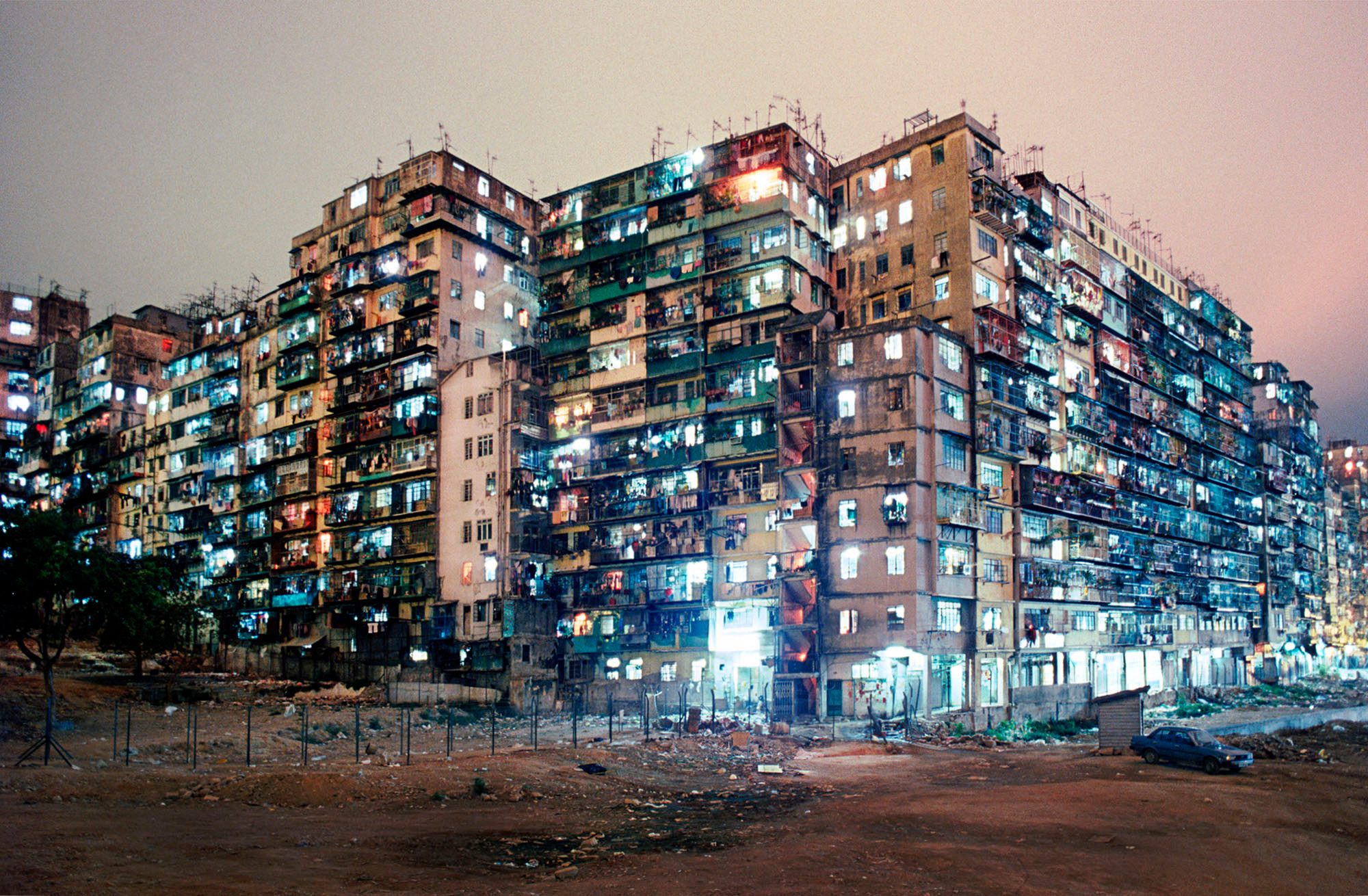
Construction and population in the walled city exploded in the 1960s. With no real enforcement of laws, people built whatever they wanted on top of older structures. 33,000 people and 350 buildings were crammed into approximately 6.5 acres, and the walled city reached it’s maximum size in the late 70s/early 80s. The only hard restriction was that buildings couldn’t go any higher than 14 stories, and only because the airport was so close to the walled city. If they went any higher, airplanes would have crashed into them.
.jpg)
The city was like a maze. It was so dense with buildings that sunlight couldn’t reach the ground level in most areas. Only those with a residence on the edge of the walled city had sunlight in their homes. The rest had to go to the roof to get some sun (and fresh air). But you could never escape the sound of the jet airplanes flying right over your head. In some sections of the walled city, you could travel from one end to the other without ever going to the ground floor.
.jpg)
It’s not that there were no laws or government services, it’s just that any regulations weren’t enforced very well. They had some services like mail delivery and some social services. But a lot of other services or regulations were neglected. Medical authorities didn’t intervene with the many illegal clinics in the walled city. And the education department didn’t regulate the schools. The regulations for the many industrial and food factories were not enforced.
.jpg)
.jpg)
The few regulations that were enforced, were mainly due to health and fire concerns. There was a trash service, but there were no repercussions if you threw your garbage on the roof or in the streets. Trash collectors came through nightly to remove the 2 tons of garbage that accumulated every day. The garbage and lack of food factory regulation led to an infestation of rats.
In 1963, the Kai Fung Association was created by residents to petition for their rights. They worked with the Hong Kong government to get needed services, while also claiming loudly that they were part of mainland China. Most importantly, they wanted a better water supply.
There were eight official standing pipe water sources, with only one actually within the city. All other official sources were along the outside edges. A few factories and businesses had water piped directly to them, but most of the residences did not have running water. Many people just payed a private party to install their own wells or illegally tap into the main line. A lot of these wells were no good for drinking water though, because there were open sewer drains. Before that, trash collectors just had to collect “night soil” from the alleys. So most shallow wells were contaminated. For people to get drinking water to their homes, water carriers were hired. The maze of pipes overhead always leaked, so many residents had to carry umbrellas when traveling through the ground level.
.jpg)
In the late 70s, electricity was supplied to the city by China Electric. Before that, it was really only available to people along the edge of the city. Even with official lines, the alleys were a maze of electric wires and water pipes.
.jpg)
.jpg)
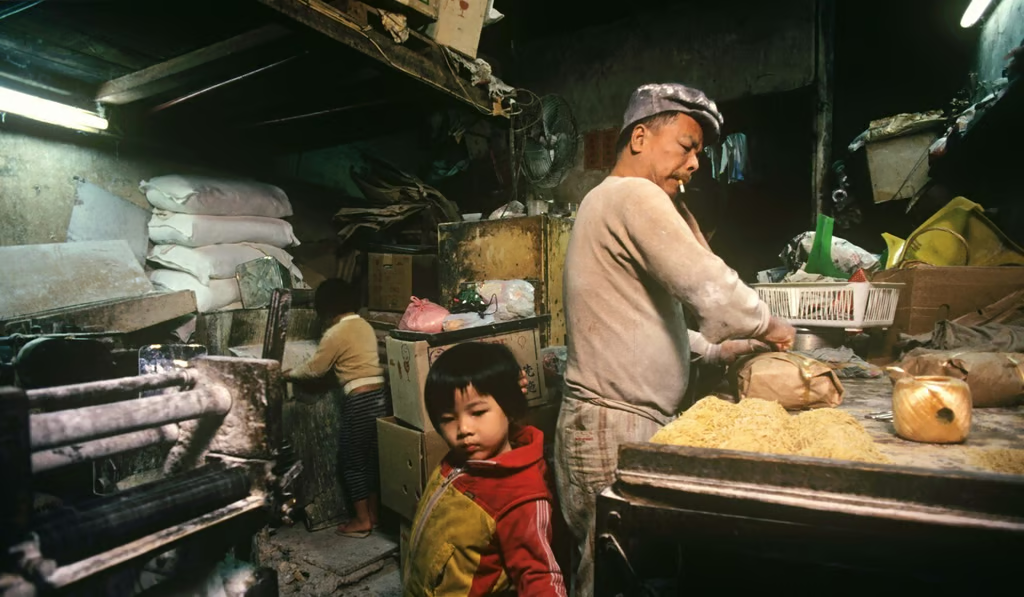
Despite all the crime, most people living in the walled city were just regular people. Some were refugees, others were just poor and couldn’t afford to live in Hong Kong. Many doctors who couldn’t get a license or work in Hong Kong, practiced in Kowloon Walled City. Many people had businesses and the rest were just living their lives.
.jpg)
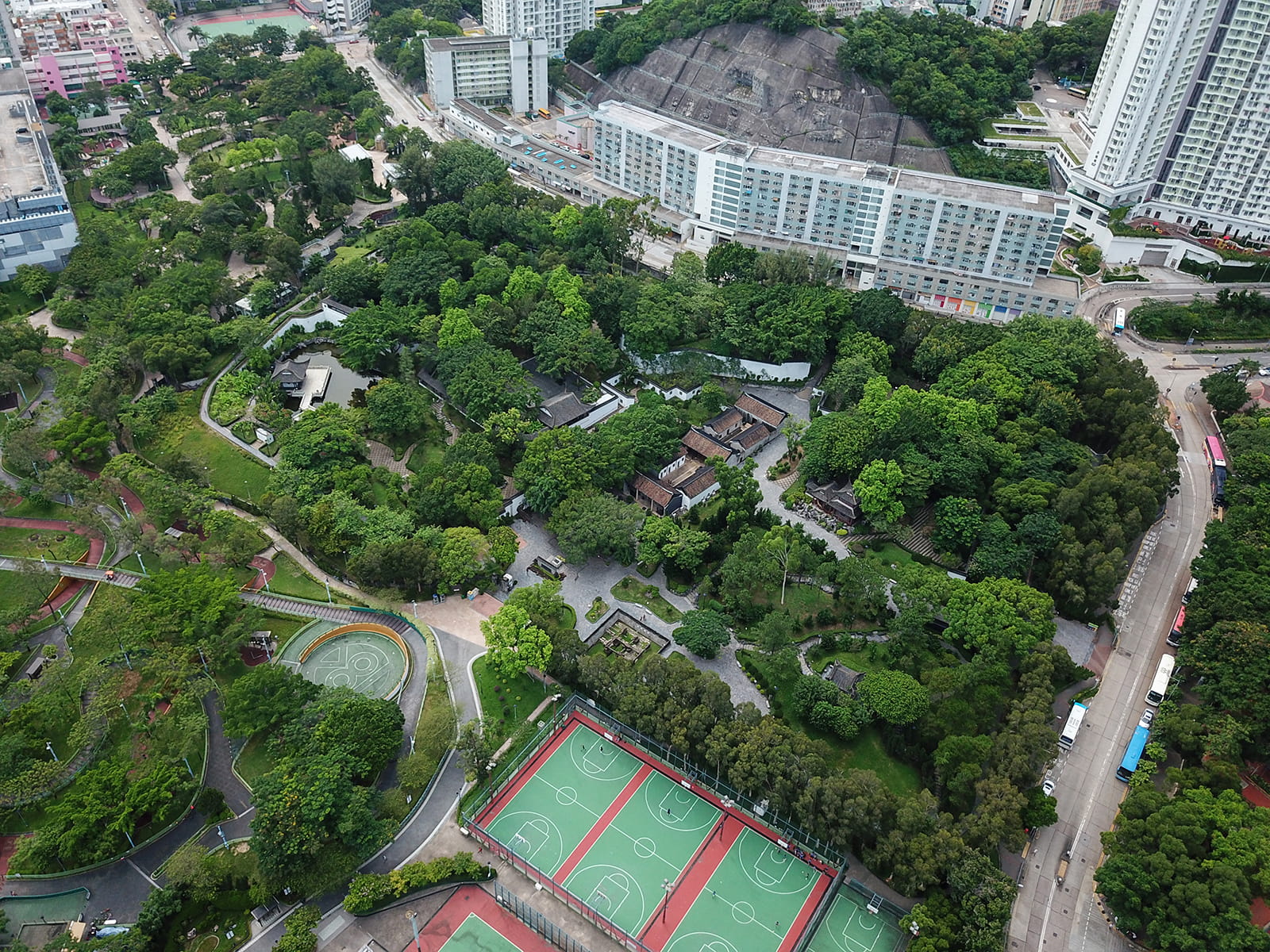
By the mid 1970s the British and Chinese governments, as well as the 33,000+ residents, were kind of over this Kowloon Walled City problem. The residents were open to anyone helping them improve their infrastructure and living conditions. They were surprised, however, when both the Hong Kong and Chinese governments announced in 1987 that their solution was to demolish the entire city and put a park in its place. They paid off the residence and evicted anyone who wouldn’t comply. The city was demolished by April 1994. Only the historic Yamen building was preserved.
.jpg)
I find the city endlessly fascinating. Yeah it was full of crime. It was disgusting. Cramped. Dark. And dangerous. If something like Covid happened in there, so many people would have died. The only real solution was to demolish it. It couldn’t be retrofitted to be safe. Not with 33,000 people crammed in there.
But it was full of people trying to live and survive. They made it work. It was a place that could only exist in a certain place at a certain time, and it will never exist again. It was far from perfect. Actively bad most of the time. But people will find a way to live, no matter the situation. That’s very inspiring. And makes me feel good about people. I wouldn’t have wanted to live there, but I’m envious of the sense of community they felt. They worked together to make the best of a bad situation.
.jpg)
Thankfully, before the walled city was demolished, many people worked to create a record of the city. Architects made maps and models, and many photographers went in to record it all before it disappeared forever. I highly recommend the books by Ian Lambot and Greg Girard. (Like 90% of the photos you see of the walled city are by these two guys.) Their book ‘City of Darkness’ is full of photos of the walled city and interviews with people that lived there. The original book is out of print and super expensive. They republished it recently, called ‘City of Darkness Revisited,” and it has more stuff in it. It seems to also be out of print, or at least unavailable, but you can find it used for much cheaper than the original book (but still like 80 bucks). You could probably get it from a library or by illicit means if you're so inclined (although, being a photo book, it really is best enjoyed in hand if you can get it). The photos are captivating, but I think the interviews are the most interesting part.
There are a lot of myths and misinformation about Kowloon Walled City. It is not helped by the fact that not a lot of details were known about the city until 1987 when the Hong Kong government did an official survey of people and buildings. A lot of old documentaries are very sensationalized and were made by British or European documentarians and are very much, “Look at these exotic Asians living in filth. Something like this would never happen in a civilized country!” They are racist. (And they never mention how this situation could only have happened because of Britain’s imperialist bullshit.) They come off as the wealthy looking down on the poor for existing. On the flip side, Kowloon Walled City is often romanticized as some anarchistic utopia by those who never lived there and who have their own biases. The truth is always vastly more complicated.
I tend to put more weight on the documentaries/books that have interviews with people that actually lived there. Cus then at least I know the researchers bothered to track people down and ask them their perspective. I hate the ones where it’s one white British guy telling another white British guy all about the city. It’s just another colonialist perspective I can do without. The only benefit of some of the older docs from the 80s/90s is that they have the best footage. These days, you have to be careful not to watch ai slop documentaries about it (avoid anything “4k”). Here are a couple documentaries I like, and of course the City of Darkness books are great because of all the interviews.